

The best news from Ukraine on science and technology
Provided by AGP
Drone Manufacturing Plant Setup, Feasibility Study, ROI Analysis and Business Plan Consultant
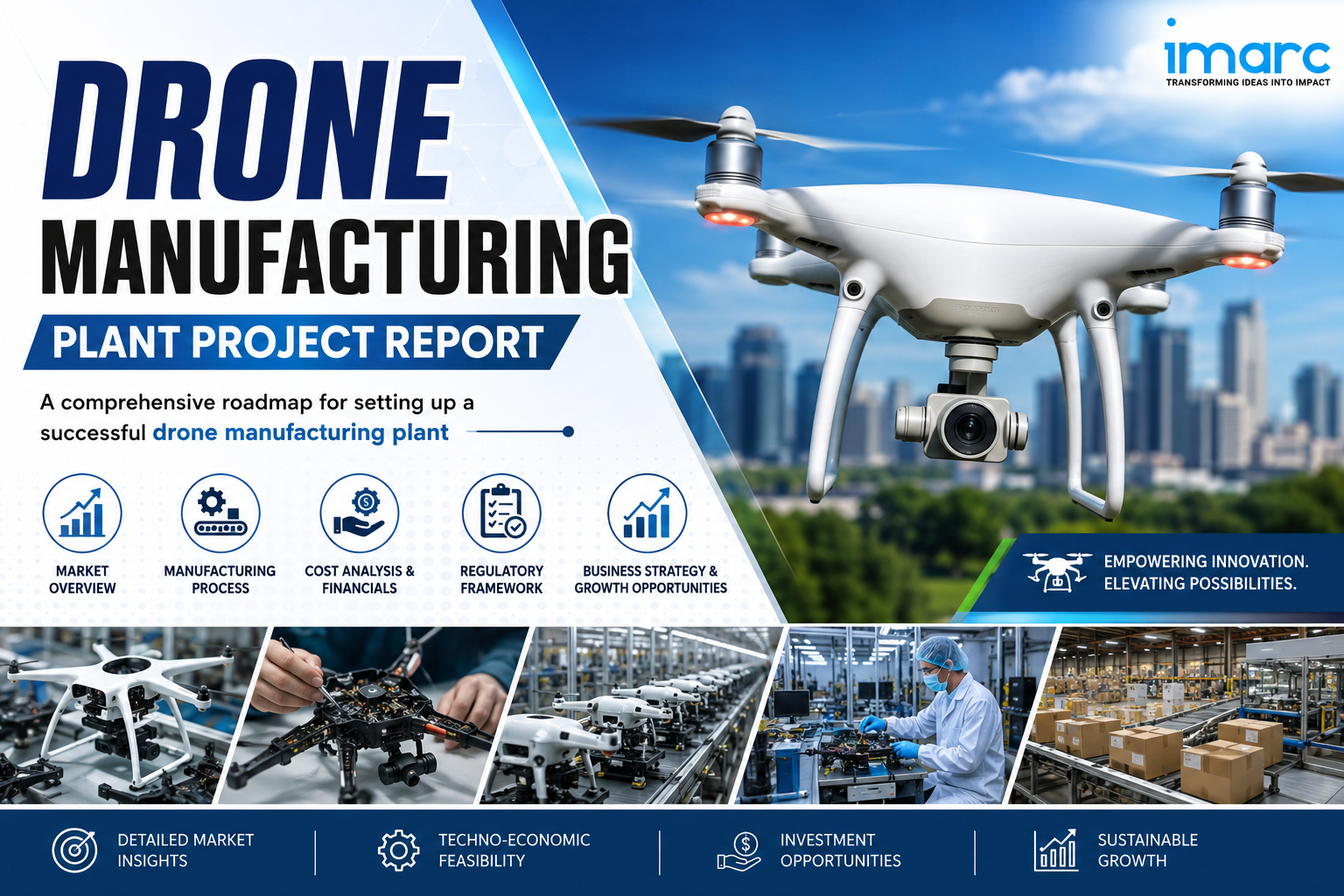
A Detailed DPR Covering CapEx/OpEx, Assembly Process, ROI and the Global Opportunity in Agricultural, Defense, Commercial and Infrastructure Drone Manufacturing
BROOKLYN, NY, UNITED STATES, May 19, 2026 /EINPresswire.com/ -- Setting up a drone manufacturing plant positions you in one of the fastest-growing technology sectors of the decade. Drones are moving from niche applications to mainstream infrastructure — across agriculture, defense, logistics, infrastructure inspection, and public services — simultaneously and at pace. India has created one of the most attractive environments for drone manufacturing globally: a ban on drone imports protects domestic producers from Chinese competition, a Production Linked Incentive scheme provides direct financial support, and the government’s 500 GW renewable energy, infrastructure, and agricultural modernisation programmes are all creating institutional demand that domestic manufacturers are positioned to capture.IMARC Group’s Drone Manufacturing Plant Project Report is a complete DPR and drone manufacturing feasibility study for investors, electronics manufacturers, and project developers. It covers the full UAV manufacturing plant setup — from frame fabrication and electronics assembly through payload integration, software calibration, and flight testing — with complete drone plant CapEx and OpEx modelling and 10-year financial projections.
𝐑𝐞𝐪𝐮𝐞𝐬𝐭 𝐟𝐨𝐫 𝐚 𝐒𝐚𝐦𝐩𝐥𝐞 𝐑𝐞𝐩𝐨𝐫𝐭: https://www.imarcgroup.com/drone-manufacturing-plant-project-report/requestsample
𝐈𝐧𝐯𝐞𝐬𝐭𝐦𝐞𝐧𝐭 𝐃𝐫𝐢𝐯𝐞𝐫𝐬 𝐚𝐧𝐝 𝐌𝐚𝐫𝐤𝐞𝐭 𝐎𝐩𝐩𝐨𝐫𝐭𝐮𝐧𝐢𝐭𝐲
Three forces are creating the current window for drone manufacturing investment:
𝐀𝐠𝐫𝐢𝐜𝐮𝐥𝐭𝐮𝐫𝐞 𝐭𝐫𝐚𝐧𝐬𝐟𝐨𝐫𝐦𝐚𝐭𝐢𝐨𝐧 𝐜𝐫𝐞𝐚𝐭𝐢𝐧𝐠 𝐭𝐡𝐞 𝐥𝐚𝐫𝐠𝐞𝐬𝐭 𝐯𝐨𝐥𝐮𝐦𝐞 𝐦𝐚𝐫𝐤𝐞𝐭: India has 140 million-plus farm holdings, most too small for conventional machinery. Agricultural drones for precision spraying, crop health monitoring, soil analysis, and seeding reduce pesticide use by 30–40%, save water, and address the chronic labour shortage in Indian farming. The Kisan Drone Yojana provides 50–100% subsidies on agri-drones for farmers, FPOs, and custom hiring centres — creating a government-funded demand pipeline. The SVAMITVA scheme uses drones to map 650,000 Indian villages for land record digitisation, a programme that requires ongoing drone supply and servicing.
𝐃𝐞𝐟𝐞𝐧𝐬𝐞 𝐚𝐧𝐝 𝐬𝐮𝐫𝐯𝐞𝐢𝐥𝐥𝐚𝐧𝐜𝐞 𝐜𝐫𝐞𝐚𝐭𝐢𝐧𝐠 𝐚 𝐡𝐢𝐠𝐡-𝐯𝐚𝐥𝐮𝐞 𝐜𝐚𝐩𝐭𝐢𝐯𝐞 𝐬𝐞𝐠𝐦𝐞𝐧𝐭: India’s Ministry of Defence has mandated indigenisation across its procurement programme. Drones for border surveillance, reconnaissance, logistics support, and counter-drone applications are priority acquisition categories. Defense drone contracts are long-term, high-value, and reserved for domestic manufacturers — insulating certified suppliers from price competition. The escalation of autonomous aerial systems in modern military doctrine globally has created a structural technology investment cycle that is just entering its expansion phase.
𝐈𝐦𝐩𝐨𝐫𝐭 𝐛𝐚𝐧 𝐜𝐫𝐞𝐚𝐭𝐢𝐧𝐠 𝐚 𝐩𝐫𝐨𝐭𝐞𝐜𝐭𝐞𝐝 𝐝𝐨𝐦𝐞𝐬𝐭𝐢𝐜 𝐦𝐚𝐫𝐤𝐞𝐭: In 2022, India banned the import of commercial drones (with narrow exceptions for R&D and defense). This single policy decision eliminated Chinese drone competition — which had previously dominated the market — from every commercial application. Domestic manufacturers now serve an import-substitution market of approximately USD 1.3 billion with no direct foreign competition. The PLI scheme adds up to ₹120 crore in financial incentives over three years, and PLI 2.0 with a potential ₹10,000 crore Drone Shakti mission is being finalized, targeting 30% domestic value content.
𝐃𝐫𝐨𝐧𝐞 𝐓𝐲𝐩𝐞𝐬 𝐚𝐧𝐝 𝐏𝐫𝐨𝐝𝐮𝐜𝐭 𝐑𝐚𝐧𝐠𝐞
A drone manufacturing plant’s product range determines its end markets, technology requirements, and margin profile:
• Agricultural spraying drones: Multi-rotor drones with tank capacity of 10–40 litres for precision pesticide, fertiliser, and herbicide application. India’s largest volume commercial drone segment by units. High repeat purchase rate as farmers switch from manual to drone-assisted operations. An agricultural drone manufacturing plant targeting agri-cooperatives and custom hiring centres has the most accessible customer acquisition path in India.
• Fixed-wing and VTOL survey drones: Fixed-wing or vertical take-off and landing (VTOL) platforms for large-area mapping, corridor inspection, and photogrammetry. Used in infrastructure surveying, mining, construction, and land mapping. Longer flight time and greater coverage than multi-rotor platforms for area-based missions.
• Defense and surveillance UAVs: Long-endurance multi-rotor and fixed-wing platforms with EO/IR cameras, LiDAR, and communication relay payloads. Supplied to military, paramilitary, and state police forces. Requires DSIR registration, MoD vendor qualification, and domestic content certification. Highest per-unit revenue and lowest volume in the range.
• Commercial delivery and logistics drones: Multi-rotor platforms with payload capacity of 2–10 kg for last-mile delivery, emergency medical supply, and e-commerce fulfilment. India’s BVLOS (beyond visual line of sight) regulatory framework is being implemented to unlock this segment at scale. Amazon, Dunzo, and healthcare logistics companies are active development partners.
• Infrastructure inspection drones: Drones with thermal cameras, ultrasonic sensors, and gas detection payloads for power line inspection, pipeline monitoring, solar farm inspection, and bridge assessment. Sold to power utilities, oil and gas operators, and infrastructure asset managers on service or equipment supply contracts.
𝐃𝐫𝐨𝐧𝐞 𝐌𝐚𝐧𝐮𝐟𝐚𝐜𝐭𝐮𝐫𝐢𝐧𝐠 𝐏𝐥𝐚𝐧𝐭 𝐅𝐞𝐚𝐬𝐢𝐛𝐢𝐥𝐢𝐭𝐲 𝐑𝐞𝐩𝐨𝐫𝐭: https://www.imarcgroup.com/drone-manufacturing-plant-project-report
𝐇𝐨𝐰 𝐚 𝐃𝐫𝐨𝐧𝐞 𝐌𝐚𝐧𝐮𝐟𝐚𝐜𝐭𝐮𝐫𝐢𝐧𝐠 𝐏𝐥𝐚𝐧𝐭 𝐖𝐨𝐫𝐤𝐬 — 𝐓𝐡𝐞 𝐀𝐬𝐬𝐞𝐦𝐛𝐥𝐲 𝐚𝐧𝐝 𝐂𝐚𝐥𝐢𝐛𝐫𝐚𝐭𝐢𝐨𝐧 𝐏𝐫𝐨𝐜𝐞𝐬𝐬
Drone manufacturing is a precision electronics assembly process rather than a traditional manufacturing operation. The process combines mechanical fabrication, electronics integration, and software development:
• 𝐅𝐫𝐚𝐦𝐞 𝐟𝐚𝐛𝐫𝐢𝐜𝐚𝐭𝐢𝐨𝐧: The structural frame — typically carbon fibre composite, aluminium alloy, or injection-moulded engineering polymer — is fabricated or sourced. Frame accounts for 70–80% of raw material cost. Carbon fibre frames provide the best strength-to-weight ratio for performance applications; aluminium and polymer frames reduce drone manufacturing unit cost in cost-sensitive agricultural and consumer segments
• 𝐏𝐫𝐨𝐩𝐮𝐥𝐬𝐢𝐨𝐧 𝐚𝐬𝐬𝐞𝐦𝐛𝐥𝐲: Brushless DC motors are mounted to the frame arms. Motor specification (KV rating, diameter, stator size) is matched to the drone’s payload and endurance requirements. Electronic Speed Controllers (ESCs) are wired to each motor and connected to the power distribution board
• 𝐅𝐥𝐢𝐠𝐡𝐭 𝐜𝐨𝐧𝐭𝐫𝐨𝐥𝐥𝐞𝐫 𝐚𝐧𝐝 𝐞𝐥𝐞𝐜𝐭𝐫𝐨𝐧𝐢𝐜𝐬 𝐢𝐧𝐭𝐞𝐠𝐫𝐚𝐭𝐢𝐨𝐧: The flight controller (the drone’s central processing unit) is mounted centrally. GPS/GNSS module, IMU (inertial measurement unit), barometer, and magnetic compass are integrated. Power management module, telemetry radio, and receiver are connected and tested. For defense platforms, encrypted communication modules and hardened electronics are integrated
• 𝐏𝐚𝐲𝐥𝐨𝐚𝐝 𝐦𝐨𝐮𝐧𝐭𝐢𝐧𝐠: Camera gimbals, sprayer tanks and pumps, sensor pods, or delivery mechanisms are mounted and wired. Payload integration is typically the highest-engineering-effort stage for specialist commercial applications
• 𝐁𝐚𝐭𝐭𝐞𝐫𝐲 𝐢𝐧𝐭𝐞𝐠𝐫𝐚𝐭𝐢𝐨𝐧: Lithium polymer (LiPo) or lithium-ion battery packs are integrated. Battery management system (BMS) connections, charging port, and quick-release mechanisms are fitted. Battery selection determines drone endurance, payload capacity, and thermal safety profile
• 𝐒𝐨𝐟𝐭𝐰𝐚𝐫𝐞 𝐟𝐥𝐚𝐬𝐡𝐢𝐧𝐠 𝐚𝐧𝐝 𝐜𝐨𝐧𝐟𝐢𝐠𝐮𝐫𝐚𝐭𝐢𝐨𝐧: Flight controller firmware is flashed and configured. Flight parameters, PID tuning, fail-safe settings, geofencing, and operational mode profiles are programmed. Proprietary mission planning software is integrated and tested for commercial drone manufacturing plant applications
• 𝐆𝐫𝐨𝐮𝐧𝐝 𝐜𝐚𝐥𝐢𝐛𝐫𝐚𝐭𝐢𝐨𝐧: Compass calibration, IMU calibration, ESC calibration, and sensor validation are performed. Functional checks cover all actuators, sensors, communication links, and payload interfaces
• Flight testing and quality certification: Each unit undergoes structured test flights covering hover stability, GPS hold, waypoint navigation, return-to-home, and payload operation. Units passing all tests are certified for dispatch. Failure modes are documented, corrected, and re-tested
𝐏𝐥𝐚𝐧𝐭 𝐈𝐧𝐯𝐞𝐬𝐭𝐦𝐞𝐧𝐭 𝐄𝐜𝐨𝐧𝐨𝐦𝐢𝐜𝐬
𝐏𝐫𝐨𝐝𝐮𝐜𝐭𝐢𝐨𝐧 𝐂𝐚𝐩𝐚𝐜𝐢𝐭𝐲:
• The proposed manufacturing facility is designed with an annual production capacity ranging between 10,000–100,000 units, enabling economies of scale while maintaining operational flexibility
𝐏𝐫𝐨𝐟𝐢𝐭𝐚𝐛𝐢𝐥𝐢𝐭𝐲 𝐁𝐞𝐧𝐜𝐡𝐦𝐚𝐫𝐤𝐬:
• Gross Profit: 35–45%
• Net Profit: 15–25% after financing costs, depreciation, and taxes
𝐎𝐩𝐞𝐫𝐚𝐭𝐢𝐧𝐠 𝐂𝐨𝐬𝐭 (𝐎𝐩𝐄𝐱) 𝐁𝐫𝐞𝐚𝐤𝐝𝐨𝐰𝐧:
• Raw Materials (frame, motors, ESCs, flight controllers, batteries): 70–80% of total OpEx. Frame and structural components are the primary cost driver
• Utilities: 5–10% of OpEx — drone assembly is not energy-intensive relative to process manufacturing
𝐃𝐫𝐨𝐧𝐞 𝐏𝐥𝐚𝐧𝐭 𝐂𝐚𝐩𝐄𝐱 𝐂𝐨𝐦𝐩𝐨𝐧𝐞𝐧𝐭𝐬:
• 𝐋𝐚𝐧𝐝 𝐚𝐧𝐝 𝐟𝐚𝐜𝐭𝐨𝐫𝐲: clean assembly hall, electronics workstations, flight test area (indoor or outdoor), anechoic chamber for RF testing (for defense), quality control laboratory
• 𝐂𝐨𝐫𝐞 𝐞𝐪𝐮𝐢𝐩𝐦𝐞𝐧𝐭: precision electronics assembly stations, soldering and PCB rework equipment, carbon fibre cutting and layup tools, CNC milling for frame fabrication, 3D printers for prototype and jig production
• 𝐓𝐞𝐬𝐭𝐢𝐧𝐠 𝐢𝐧𝐟𝐫𝐚𝐬𝐭𝐫𝐮𝐜𝐭𝐮𝐫𝐞: indoor flight test cage, motor and propeller test bench, battery formation and cycle testing, GPS signal simulation unit, vibration testing rig for defense platforms
• 𝐒𝐨𝐟𝐭𝐰𝐚𝐫𝐞 𝐚𝐧𝐝 𝐈𝐏: flight controller software licences, ground control station software, mission planning tools, proprietary firmware development environment
• 𝐏𝐫𝐞-𝐨𝐩𝐞𝐫𝐚𝐭𝐢𝐯𝐞 𝐜𝐨𝐬𝐭𝐬: DGCA certification, DSIR registration for defense supply, PLI scheme application and compliance documentation, initial component inventory.
𝐀𝐬𝐤 𝐀𝐧𝐚𝐥𝐲𝐬𝐭 𝐟𝐨𝐫 𝐂𝐮𝐬𝐭𝐨𝐦𝐢𝐳𝐚𝐭𝐢𝐨𝐧: https://www.imarcgroup.com/request?type=report&id=21228&flag=C
𝐆𝐥𝐨𝐛𝐚𝐥 𝐌𝐚𝐫𝐤𝐞𝐭 𝐚𝐧𝐝 𝐑𝐞𝐠𝐢𝐨𝐧𝐚𝐥 𝐃𝐞𝐦𝐚𝐧𝐝
The global drone market, valued at USD 33.9 billion in 2025, is projected to reach USD 79.1 billion by 2034 at a CAGR of 9.89%. Military and defense applications account for the largest share of value, while commercial applications are the fastest-growing volume segment.
𝐈𝐧𝐝𝐢𝐚: The India drones market was valued at USD 1,316.48 million in 2025 and is projected to reach USD 2,731.54 million by 2034 at a CAGR of 8.45%. India’s import ban on commercial drones, PLI scheme, and Drone Rules 2021 — which reduced approval forms from 25 to 5 — have created a structurally protected and policy-accelerated domestic manufacturing environment. Over 300 drone startups have emerged. Key manufacturers include IdeaForge, Garuda Aerospace, Marut Drones, Aarav Unmanned Systems, and Zen Technologies. India targets becoming a global drone hub by 2030.
𝐔𝐧𝐢𝐭𝐞𝐝 𝐒𝐭𝐚𝐭𝐞𝐬: The largest defense drone market globally. US DoD drone procurement spans surveillance, strike, logistics, and communications relay applications. Domestic drone manufacturing incentives under the National Defense Authorization Act restrict Chinese-origin components in government contracts, creating demand for non-Chinese supply chains. Commercial applications in agriculture, infrastructure, and package delivery are scaling rapidly.
𝐂𝐡𝐢𝐧𝐚: Dominates global commercial drone manufacturing through DJI and other producers. However, geopolitical restrictions, US and EU import bans, and India’s import prohibition are structurally reducing Chinese market access in key geographies, creating openings for Indian and Southeast Asian manufacturers.
𝐄𝐮𝐫𝐨𝐩𝐞: Strong commercial drone adoption in agriculture, infrastructure, and emergency services. EU regulations on drone traffic management (U-Space) are being implemented, creating a structured operating environment that expands commercial drone deployment. Defense drone spending is accelerating post-Ukraine in NATO member states.
𝐒𝐨𝐮𝐭𝐡𝐞𝐚𝐬𝐭 𝐀𝐬𝐢𝐚: Vietnam, Indonesia, and the Philippines have strong agricultural drone adoption and growing defense drone requirements. Indonesia’s archipelagic geography makes drones essential for logistics and infrastructure inspection. Regional manufacturers are scaling to serve both domestic demand and export markets.
𝐒𝐢𝐭𝐞 𝐒𝐞𝐥𝐞𝐜𝐭𝐢𝐨𝐧 𝐚𝐧𝐝 𝐏𝐨𝐥𝐢𝐜𝐲 𝐒𝐮𝐩𝐩𝐨𝐫𝐭
Location decisions for a drone manufacturing plant setup directly affect supply chain access, regulatory compliance, and institutional buyer access:
• 𝐄𝐥𝐞𝐜𝐭𝐫𝐨𝐧𝐢𝐜𝐬 𝐬𝐮𝐩𝐩𝐥𝐲 𝐜𝐡𝐚𝐢𝐧 𝐩𝐫𝐨𝐱𝐢𝐦𝐢𝐭𝐲: Drone manufacturing is electronics-intensive. Proximity to electronics manufacturing clusters in Tamil Nadu (Chennai, Sriperumbudur), Karnataka (Bengaluru), Telangana, and NCR reduces component procurement lead time and logistics cost. Access to PCB, motor, and sensor suppliers through Electronics Manufacturing Clusters (EMCs) is a key supply chain advantage
• 𝐃𝐞𝐟𝐞𝐧𝐬𝐞 𝐬𝐞𝐜𝐭𝐨𝐫 𝐚𝐜𝐜𝐞𝐬𝐬: Defense drone manufacturers require MoD vendor registration and DSIR certification. Proximity to defence PSUs, DPSUs, and defence corridor zones — such as the UP Defence Corridor (Lucknow–Agra) and Tamil Nadu Defence Corridor — facilitates vendor qualification and institutional sales
• 𝐏𝐋𝐈 𝐚𝐧𝐝 𝐠𝐨𝐯𝐞𝐫𝐧𝐦𝐞𝐧𝐭 𝐬𝐜𝐡𝐞𝐦𝐞 𝐞𝐥𝐢𝐠𝐢𝐛𝐢𝐥𝐢𝐭𝐲: PLI Scheme eligibility requires MSME or startup registration, meeting minimum sales and value addition thresholds, and producing approved drone or drone component categories. Documentation for PLI application should be prepared before plant establishment to ensure incentive access from the first production year. Drone Shakti and Kisan Drone Yojana create institutional procurement channels that PLI-certified manufacturers can directly access
• 𝐑&𝐃 𝐚𝐧𝐝 𝐭𝐚𝐥𝐞𝐧𝐭 𝐞𝐜𝐨𝐬𝐲𝐬𝐭𝐞𝐦: Drone development requires embedded systems engineers, aeronautical designers, and software developers. Cities with active IIT/NIT ecosystems, aerospace research institutes (NAL, ADA, DRDO labs), and funded startup ecosystems — Bengaluru, Hyderabad, Pune, Chennai — provide the talent and collaboration infrastructure for product development alongside manufacturing
• 𝐓𝐞𝐬𝐭𝐢𝐧𝐠 𝐜𝐨𝐫𝐫𝐢𝐝𝐨𝐫𝐬: India is establishing dedicated drone testing corridors. Access to a licensed drone testing corridor reduces the cost and timeline for new model certification and significantly accelerates time-to-market for commercial drone manufacturing plant output
𝐑𝐞𝐩𝐨𝐫𝐭 𝐂𝐨𝐯𝐞𝐫𝐚𝐠𝐞
IMARC Group’s Drone Plant Project Report is a complete drone manufacturing business plan and technical reference:
• 𝐅𝐮𝐥𝐥 𝐩𝐫𝐨𝐜𝐞𝐬𝐬 𝐟𝐥𝐨𝐰 𝐰𝐢𝐭𝐡 𝐚𝐬𝐬𝐞𝐦𝐛𝐥𝐲 𝐬𝐞𝐪𝐮𝐞𝐧𝐜𝐞: from frame fabrication through electronics integration, payload mounting, calibration, flight testing, and dispatch
• 𝐃𝐫𝐨𝐧𝐞 𝐩𝐥𝐚𝐧𝐭 𝐂𝐚𝐩𝐄𝐱 𝐛𝐫𝐞𝐚𝐤𝐝𝐨𝐰𝐧: assembly equipment, testing infrastructure, software licences, and facility construction
• 10-𝐲𝐞𝐚𝐫 𝐎𝐩𝐄𝐱 𝐩𝐫𝐨𝐣𝐞𝐜𝐭𝐢𝐨𝐧𝐬: component procurement, labour, calibration and testing costs, software maintenance
• 𝐅𝐢𝐧𝐚𝐧𝐜𝐢𝐚𝐥 𝐦𝐨𝐝𝐞𝐥: drone plant ROI, IRR, NPV, DSCR, break-even, and sensitivity tables across volume and product mix scenarios
• 𝐏𝐫𝐨𝐝𝐮𝐜𝐭 𝐦𝐢𝐱 𝐬𝐭𝐫𝐚𝐭𝐞𝐠𝐲: agricultural versus commercial delivery versus defense — margin, customer type, and regulatory requirement comparison for a commercial drone manufacturing plant
• 𝐏𝐋𝐈 𝐬𝐜𝐡𝐞𝐦𝐞 𝐨𝐩𝐭𝐢𝐦𝐢𝐬𝐚𝐭𝐢𝐨𝐧: value addition calculation methodology, eligible product categories, documentation checklist, and incentive maximisation strategy
• 𝐃𝐫𝐨𝐧𝐞 𝐩𝐥𝐚𝐧𝐭 𝐬𝐞𝐭𝐮𝐩 𝐜𝐨𝐬𝐭 𝐛𝐞𝐧𝐜𝐡𝐦𝐚𝐫𝐤𝐢𝐧𝐠: across different capacity configurations and product categories
• 𝐑𝐞𝐠𝐮𝐥𝐚𝐭𝐨𝐫𝐲 𝐜𝐨𝐦𝐩𝐥𝐢𝐚𝐧𝐜𝐞: DGCA drone certification, DSIR registration, UIN requirements, BVLOS approval pathway, MoD vendor qualification
The report is built for technology entrepreneurs evaluating a drone plant investment, electronics companies expanding into UAV manufacturing, defense sector investors seeking indigenous supply chain opportunities, and banks requiring a bankable drone manufacturing feasibility study for project financing.
𝐁𝐫𝐨𝐰𝐬𝐞 𝐌𝐨𝐫𝐞 𝐅𝐞𝐚𝐬𝐢𝐛𝐢𝐥𝐢𝐭𝐲 𝐒𝐭𝐮𝐝𝐲 𝐚𝐧𝐝 𝐁𝐮𝐬𝐢𝐧𝐞𝐬𝐬 𝐏𝐥𝐚𝐧 𝐑𝐞𝐩𝐨𝐫𝐭𝐬 𝐛𝐲 𝐈𝐌𝐀𝐑𝐂 𝐆𝐫𝐨𝐮𝐩:
• 𝗦𝗵𝗿𝗶𝗺𝗽 𝗣𝗿𝗼𝗰𝗲𝘀𝘀𝗶𝗻𝗴 𝗣𝗹𝗮𝗻𝘁 𝗣𝗿𝗼𝗷𝗲𝗰𝘁 𝗥𝗲𝗽𝗼𝗿𝘁: https://www.imarcgroup.com/shrimp-processing-plant-project-report
• 𝗦𝗼𝗹𝗮𝗿 𝗚𝗹𝗮𝘀𝘀 𝗠𝗮𝗻𝘂𝗳𝗮𝗰𝘁𝘂𝗿𝗶𝗻𝗴 𝗣𝗹𝗮𝗻𝘁 𝗣𝗿𝗼𝗷𝗲𝗰𝘁 𝗥𝗲𝗽𝗼𝗿𝘁: https://www.imarcgroup.com/solar-glass-manufacturing-plant-project-report
• 𝗦𝘆𝗿𝗶𝗻𝗴𝗲 𝗠𝗮𝗻𝘂𝗳𝗮𝗰𝘁𝘂𝗿𝗶𝗻𝗴 𝗣𝗹𝗮𝗻𝘁 𝗣𝗿𝗼𝗷𝗲𝗰𝘁 𝗥𝗲𝗽𝗼𝗿𝘁: https://www.imarcgroup.com/syringe-manufacturing-plant-project-report
• 𝗣𝗲𝗿𝗳𝘂𝗺𝗲 𝗠𝗮𝗻𝘂𝗳𝗮𝗰𝘁𝘂𝗿𝗶𝗻𝗴 𝗣𝗹𝗮𝗻𝘁 𝗣𝗿𝗼𝗷𝗲𝗰𝘁 𝗥𝗲𝗽𝗼𝗿𝘁: https://www.imarcgroup.com/perfume-manufacturing-plant-project-report
• 𝗡𝘂𝘁𝗿𝗮𝗰𝗲𝘂𝘁𝗶𝗰𝗮𝗹 𝗠𝗮𝗻𝘂𝗳𝗮𝗰𝘁𝘂𝗿𝗶𝗻𝗴 𝗣𝗹𝗮𝗻𝘁 𝗣𝗿𝗼𝗷𝗲𝗰𝘁 𝗥𝗲𝗽𝗼𝗿𝘁: https://www.imarcgroup.com/nutraceutical-manufacturing-plant-project-report
• 𝗢𝗻𝗶𝗼𝗻 𝗣𝗼𝘄𝗱𝗲𝗿 𝗠𝗮𝗻𝘂𝗳𝗮𝗰𝘁𝘂𝗿𝗶𝗻𝗴 𝗣𝗹𝗮𝗻𝘁 𝗣𝗿𝗼𝗷𝗲𝗰𝘁 𝗥𝗲𝗽𝗼𝗿𝘁: https://www.imarcgroup.com/onion-powder-manufacturing-plant-project-report
• 𝗢𝗿𝗮𝗹 𝗥𝗲𝗵𝘆𝗱𝗿𝗮𝘁𝗶𝗼𝗻 𝗦𝗮𝗹𝘁 (𝗢𝗥𝗦) 𝗠𝗮𝗻𝘂𝗳𝗮𝗰𝘁𝘂𝗿𝗶𝗻𝗴 𝗣𝗹𝗮𝗻𝘁 𝗣𝗿𝗼𝗷𝗲𝗰𝘁 𝗥𝗲𝗽𝗼𝗿𝘁: https://www.imarcgroup.com/oral-rehydration-salt-manufacturing-plant-project-report
• 𝗣𝗮𝗻 𝗠𝗮𝘀𝗮𝗹𝗮 𝗠𝗮𝗻𝘂𝗳𝗮𝗰𝘁𝘂𝗿𝗶𝗻𝗴 𝗣𝗹𝗮𝗻𝘁 𝗣𝗿𝗼𝗷𝗲𝗰𝘁 𝗥𝗲𝗽𝗼𝗿𝘁: https://www.imarcgroup.com/pan-masala-manufacturing-plant-project-report
• 𝗣𝗮𝘃𝗲𝗿𝘀 𝗕𝗹𝗼𝗰𝗸 𝗠𝗮𝗻𝘂𝗳𝗮𝗰𝘁𝘂𝗿𝗶𝗻𝗴 𝗣𝗹𝗮𝗻𝘁 𝗣𝗿𝗼𝗷𝗲𝗰𝘁 𝗥𝗲𝗽𝗼𝗿𝘁: https://www.imarcgroup.com/pavers-block-manufacturing-plant-project-report
𝐀𝐛𝐨𝐮𝐭 𝐈𝐌𝐀𝐑𝐂 𝐆𝐫𝐨𝐮𝐩
IMARC Group is a global market research and management consulting firm. Its plant setup and DPR practice serves investors, developers, government agencies, and banks across 50+ countries, delivering reports used for loan documentation, investment approvals, and engineering planning.
Elena Anderson
IMARC Services Private Limited
+1 201-971-6302
email us here
Legal Disclaimer:
EIN Presswire provides this news content "as is" without warranty of any kind. We do not accept any responsibility or liability for the accuracy, content, images, videos, licenses, completeness, legality, or reliability of the information contained in this article. If you have any complaints or copyright issues related to this article, kindly contact the author above.
